DTF vs Screen Printing Shirts: 2026 Buyer's Guide
June 21, 2026
DTF vs Screen Printing Shirts: 2026 Buyer’s Guide
DTF (Direct-to-Film) printing and screen printing are two distinct shirt decoration methods, each built for different production realities. Choosing between them depends on your order size, design complexity, fabric type, and budget. DTF transfers a printed film layer directly onto the garment with no setup fees. Screen printing pushes ink through a mesh stencil, requiring a separate screen for each color. For small businesses and individuals comparing dtf vs screen printing shirts in 2026, understanding where each method wins is the fastest path to a smarter order.
How do cost and order size affect DTF vs screen printing for custom shirts?
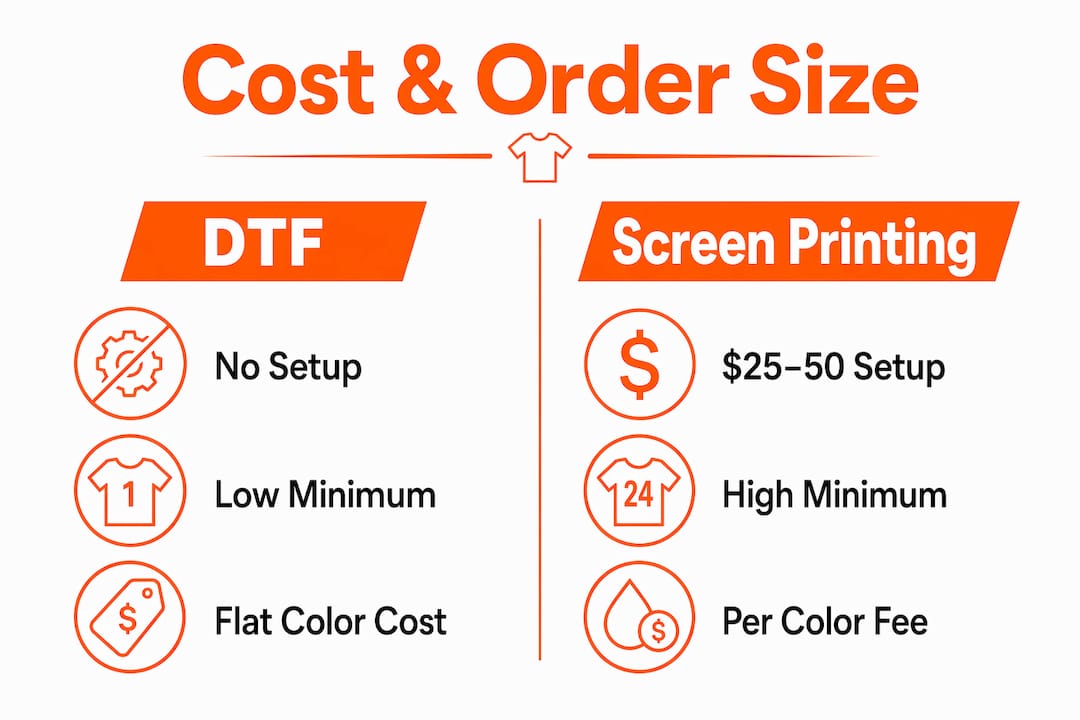
Setup cost is the single biggest factor separating these two methods. Screen printing charges $25–$50 per screen per color, so a four-color design costs $100–$200 before a single shirt is printed. DTF has zero setup fees, making it immediately cheaper for small or one-off orders.
Order size determines where the math flips. Orders under 24–50 pieces are almost always cheaper with DTF because setup costs are not spread across enough units to justify screen printing. Once you cross roughly 48–300 units, depending on color count, screen printing’s lower per-piece cost takes over and the total bill drops below DTF.
Color count multiplies the cost gap. A one-color screen print at 100 shirts is very affordable. Add three more colors and you add three more screens, three more setup fees, and a noticeably higher price per shirt. DTF unit cost stays flat regardless of how many colors your design uses. That flat cost structure makes DTF the safer choice for multi-color or frequently changing designs.
| Factor | DTF | Screen Printing |
|---|---|---|
| Setup fee | None | $25–$50 per color per screen |
| Best order size | Under 24–50 pieces | 48+ pieces |
| Cost per unit at scale | Higher | Lower |
| Color count impact | None | Adds cost per color |
Pro Tip: If you are testing a new design before committing to a large run, print 12–24 shirts with DTF first. You avoid setup fees and can confirm the design sells before investing in screens.
Screen printing also carries minimum order requirements of typically 12–24 pieces. DTF has no minimum. That difference matters for print-on-demand sellers and anyone fulfilling one-off custom orders.
What are the design complexity and color differences?
DTF handles unlimited colors, gradients, and photographic detail at a flat cost. A full-color photo of a skyline, a logo with 12 shades, or a design with soft shadows all print the same way with DTF. There is no color separation process and no additional charge for complexity.
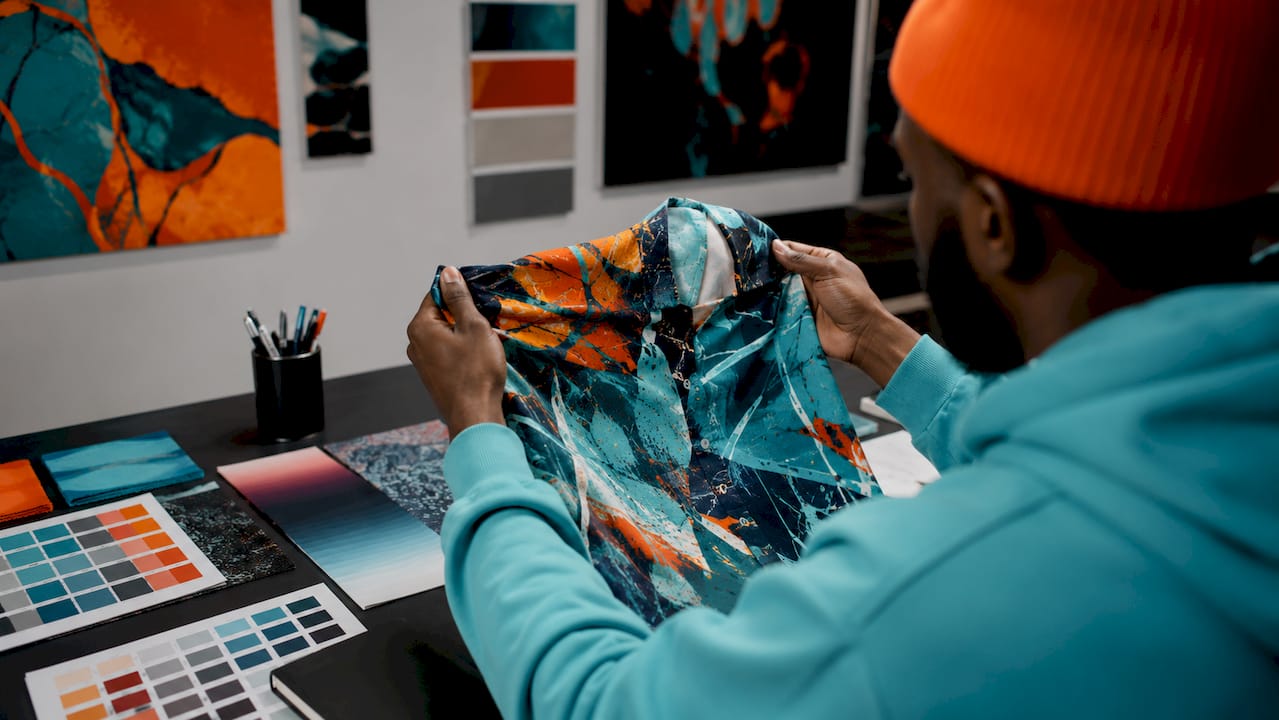
Screen printing works best with clean, bold designs using 1–6 colors. Each color requires its own screen, its own setup fee, and its own pass through the press. Photographic or gradient designs are difficult and expensive to reproduce with screen printing because they require halftone separations and careful color matching. The screen printing setup process adds upfront complexity that grows with every color you add.
Here is where each method fits by design type:
- DTF: Full-color photography, gradients, watercolor effects, complex logos, designs with fine detail or thin lines
- Screen printing: Bold one to four color logos, text-based designs, team uniforms with a consistent single design, large runs of simple graphics
For a custom color limits guide specific to screen printing, Jam4apparel breaks down exactly how color count affects pricing and production decisions.
Pro Tip: If your design has more than four colors or includes any gradient, DTF will almost always cost less and look better. Save screen printing for your proven, simple designs that you order in volume.
How do fabric types and durability compare?
DTF works on cotton, polyester, nylon, and blended fabrics without any adjustment to the process. Screen printing is built for 100% cotton and performs best with plastisol inks on natural fibers. Synthetic fabrics like polyester can cause ink adhesion problems with screen printing, particularly with dye migration on performance wear.
DTF durability is rated at 50–100+ wash cycles, which is comparable to professional screen prints when applied correctly. The key variable is application quality. A well-pressed DTF transfer on a quality blank holds up through regular washing without cracking or peeling.
The feel of the print differs noticeably between the two methods. Screen printing ink integrates into the fabric, producing what printers call an “in-fabric” feel. DTF creates a smooth film layer that sits on top of the garment surface. Screen prints develop a vintage crack over years of wear, which many customers actually prefer for a worn-in look. DTF prints stay smooth and intact on the surface.
| Attribute | DTF | Screen Printing |
|---|---|---|
| Fabric compatibility | Cotton, poly, nylon, blends | Best on 100% cotton |
| Wash durability | 50–100+ cycles | 50–100+ cycles |
| Print feel | Smooth film on surface | Ink integrated into fabric |
| Aging appearance | Stays smooth | Develops vintage texture |
For team uniforms on performance polyester, DTF is the practical choice. For cotton T-shirts ordered in bulk with a classic look, screen printing delivers a finish that ages well and costs less per unit at volume. Understanding screen printing ink types helps clarify why plastisol performs differently on synthetic versus natural fibers.
Which method fits your business model?
The answer depends on how you sell and how often your designs change. DTF’s greatest advantage is agility. No minimums, no setup fees, and no fabric restrictions make it the right tool for print-on-demand stores, custom one-off orders, and businesses still testing which designs actually sell.
Screen printing is the preferred method for high-volume production of basic designs. High-speed presses can print 300–400 shirts per hour. That throughput makes screen printing the clear winner for school spirit wear runs, corporate uniform orders, and any situation where you need hundreds of identical shirts fast and cheap.
The most practical approach for growing brands is a hybrid model:
- Test with DTF. Print 12–24 units of a new design with no setup cost. Confirm demand before committing to screens.
- Scale with screen printing. Once a design proves itself, move production to screen printing for runs of 48 or more units to cut per-piece cost.
- Keep DTF for personalization. Use DTF for any order that needs individual names, numbers, or unique artwork on each shirt.
- Reserve screen printing for your core catalog. High-volume basics like team uniforms and company shirts belong in screen printing once the design is locked.
Small businesses use this hybrid approach to minimize inventory risk and protect margins. You avoid printing 200 shirts of a design that does not sell, and you still capture the cost savings of screen printing when volume justifies it.
Pro Tip: For tournament or championship shirts where you need full-color artwork fast and in mixed sizes, DTF is the faster and more flexible option. Check out how to design tournament shirts that teams actually want to keep.
For small businesses evaluating minimum order requirements, the difference between DTF’s zero minimum and screen printing’s 12–24 piece floor can determine which method is even available to you at a given order size.
Key Takeaways
DTF is the better choice for small orders and complex designs, while screen printing wins on cost for large runs of simple artwork.
| Point | Details |
|---|---|
| Setup cost advantage | DTF has no setup fees; screen printing charges $25–$50 per color per screen. |
| Order size crossover | DTF is cheaper under 24–50 pieces; screen printing wins at 48+ units. |
| Design complexity | DTF handles unlimited colors and gradients at flat cost; screen printing adds cost per color. |
| Fabric flexibility | DTF works on cotton, polyester, nylon, and blends; screen printing is best on 100% cotton. |
| Best business strategy | Use DTF to test designs and screen printing to scale proven bestsellers in volume. |
What I have learned from watching businesses choose the wrong method
Most new businesses default to screen printing because it sounds more “official.” That instinct costs them money. I have seen small brands spend $300 on screens for a design they ordered 18 shirts of, then wonder why their cost per shirt was $25 before the blank even counted.
The uncomfortable truth is that screen printing is a volume tool. It rewards you when you already know what sells. DTF rewards you when you are still figuring that out. Mixing them up is the most common and most expensive mistake in custom apparel.
The other mistake I see is treating DTF as a lesser option. It is not. For a four-color logo on a polyester performance shirt, DTF will outperform screen printing on adhesion, color accuracy, and total cost. The method is not inferior. It is just built for a different job.
My practical advice: start every new design with DTF, no matter how confident you are. The setup savings alone fund your next test run. Once a design sells consistently at 50 or more units per order, move it to screen printing and watch your margins improve. The brands that grow fastest are the ones that treat both methods as tools in the same kit, not competitors.
— Adam
Get both methods done right with Jam4apparel
Jam4apparel handles both DTF and screen printing in-house from Lake in the Hills, Illinois, which means you get consistent quality and fast turnaround without coordinating two vendors. Whether you need 6 custom shirts for a small team or 500 for a company event, Jam4apparel prices both methods competitively and guides you toward the right choice for your order.
Small businesses, sports teams, schools, and nonprofits across the Chicagoland area rely on Jam4apparel for apparel that looks professional and holds up. Explore custom screen printing services for bulk orders or DTF printing with no minimums for flexible, small-batch production. Visit Jam4apparel to get a quote and find the right method for your next order.
FAQ
What is the main difference between DTF and screen printing?
DTF transfers a printed film onto the shirt with no setup fees and works on any fabric. Screen printing pushes ink through a mesh stencil, requires a separate screen per color, and costs less per unit at high volumes.
Which method is cheaper for small orders?
DTF is cheaper for orders under 24–50 pieces because there are no setup fees. Screen printing’s per-color setup costs make small runs expensive.
Can DTF printing handle photographic designs?
Yes. DTF prints unlimited colors, gradients, and photographic detail at a flat cost. Screen printing requires halftone separations for photographic designs, which adds complexity and cost.
How long do DTF prints last compared to screen prints?
Both methods are rated for 50–100+ wash cycles when applied correctly. Screen prints develop a textured, vintage look over time. DTF prints stay smooth on the surface.
Does screen printing work on polyester shirts?
Screen printing works best on 100% cotton. Polyester can cause dye migration issues with plastisol inks. DTF is the better choice for polyester, nylon, and performance fabric blends.
Recommended
- DTF Printing Services | No Minimum | Direct-to-Film Custom Apparel | Jam 4 Apparel | Jam 4 Apparel
- The Role of Screen Mesh in Printing: 2026 Guide | Jam 4 Apparel
- Custom Screen Printing Color Limits: Designer’s Guide | Jam 4 Apparel
- Screen Printing Ink Types Explained for Custom Apparel | Jam 4 Apparel
Ready to print your design?
Screen print, embroidery, and DTF — no minimums on many styles.